


History of Tigard, Oregon | From Farmland to Family Homes

How a farming settlement in the Tualatin Valley became one of Portland's most established suburbs, and how its history lives on through the homes and neighborhoods we see today.
What does a farmhouse built in 1880 have in common with a Craftsman-style home built in 2004? More than you might think.
Both tell a chapter in the story of Tigard, Oregon, a community that evolved from a small agricultural settlement into one of Portland's most established suburbs.
And if you look closely, much of that history is still visible in the homes and neighborhoods we see today.
Before Tigard: The Atfalati
Long before European-American settlement, the Tualatin Valley was home to the Atfalati, also known as the Tualatin Kalapuya. For thousands of years, they fished, hunted, and gathered roots and berries across what is now Washington County. They also used seasonal burning to maintain open prairies that supported food plants and wildlife.
One of their villages, Chachimahiyuk, stood along the Tualatin River near present-day Tigard.
Settlement brought devastating change. Disease sharply reduced Indigenous populations, and treaties and federal policies forcibly displaced surviving communities from their homelands.
Today, Atfalati descendants are among the members of the Confederated Tribes of Grand Ronde.
The Tigard Family Arrives: 1852
In 1852, Wilson McClendon Tigard, his wife Mary Ann, and their young son John came west from Arkansas on the Oregon Trail. They settled on a 320-acre Donation Land Claim south of Portland, in an area then called Butte and later East Butte.
Wilson helped organize the area's first school and contributed land for a Grange hall.

In the 1880s, his son Charles opened a general store that also housed the post office, and the community took a new name: Tigardville.
Immigrant families arrived through the 1880s and 1890s, and by 1900 Tigardville had the schools, churches, and stores of a small farming town.
The Railroad Arrives: 1907–1908

In 1907, the Oregon Electric Railway completed construction of its line between Portland and Salem, with the last spike driven near Tigardville. Passenger service began on January 1, 1908.
Farmers gained convenient access to Portland markets, and the town gained a new commercial center near the railway depot, approximately a mile north of the old general store.
Businesses moved to meet it.
Between 1907 and 1910, today's Main Street filled with grocery stores, a blacksmith shop, a livery stable, and Germania Hall, which offered dining, lodging, and entertainment.
Telephone service arrived in 1908 and electricity in 1911.
The railroad also gave the town its modern name. To avoid confusion with its Wilsonville stop, the Oregon Electric renamed the North Tigardville station "Tigard," and the shorter name stuck.
The railroad didn't simply make Tigard easier to reach. It helped transform a farming settlement into a growing commercial community.
From Highway Town to City: 1933–1961
Passenger rail service ended in 1933, and the automobile increasingly shaped Tigard's development. Pacific Highway, now Highway 99W, became Tigard's main transportation corridor. In 1940, the state built a viaduct to carry through traffic around the Main Street business district.
Commerce followed the highway, a pattern that would repeat across suburban America.
After World War II, Portland's growth spilled outward, and Tigard's available land and road connections made it a natural place for new housing. But the infrastructure of a rural community wasn't designed to accommodate rapid suburban growth.
The need for sewer systems, municipal services, and coordinated planning helped push residents toward incorporation. After earlier attempts failed, voters narrowly approved incorporation on September 11, 1961.
Elton Phillips became the first mayor of a city with approximately 1,749 residents. Tigard had officially become a city, but its greatest period of residential expansion was still ahead.
The Suburban Boom: 1960s Through the 1990s
Over the next four decades, farms increasingly gave way to subdivisions, schools, shopping centers, and commercial developments.
Homes built during the 1950s through the 1970s reflected postwar preferences: single-story ranches, split-levels, attached garages, and generous residential lots.
Washington Square opened in 1973, establishing Tigard as an important regional shopping destination.
Development continued into the surrounding hills, where neighborhoods around Bull Mountain brought larger homes and hillside residential settings.
The numbers illustrate the scale of the transformation. From approximately 1,700 residents at incorporation, Tigard grew to more than 54,000 residents by 2020.
What had once been a small agricultural community was now a substantial part of the Portland metropolitan area. And as the city grew, the homes people wanted were changing too.
A New Generation of Homes: The Early 2000s
By the early 2000s, Tigard had undergone another transformation. The modest ranch homes and split-levels that defined much of the postwar housing boom were now sharing the landscape with larger two-story residences designed around changing lifestyles.
Kitchens increasingly became gathering places. Homes incorporated multiple living areas, dedicated offices, and flexible floor plans that could accommodate changing household needs.
Interestingly, while the interiors reflected modern living, many builders looked backward for architectural inspiration. Craftsman-style architecture, popular in the early twentieth century, was experiencing a revival. Covered entries, prominent gables, substantial porch columns, and traditional exterior detailing became common features of newer suburban homes.
And that brings us to a home in Tigard's Whistlers Walk neighborhood.
Whistlers Walk: Two Generations of Tigard Homes
Sometimes the history of a community can be found in a single neighborhood.
In 1961, the same year Tigard became an incorporated city, a home was built at 13560 SW 121st Avenue, near what would eventually become the Whistlers Walk subdivision.
That home represented an earlier generation of Tigard's suburban development, when larger residential properties and open land were still common throughout the area.
Aerial photographs from 1996 show the older home and surrounding landscape, with mature trees, open fields, and relatively few houses.
But change was coming.
Property records indicate the older home sold in 1999, and by the early 2000s, residential development was reshaping the surrounding area.
By 2006, aerial photography reveals a dramatically different landscape. New streets, sidewalks, and individual residential lots had transformed the area into the Whistlers Walk neighborhood.
12052 SW Whistlers Loop, Tigard
Listed by Pam Waldman and Lara James
Keller Williams Portland Premiere

Among those homes was 12052 SW Whistlers Loop, built in 2004 by Don Morissette Homes.
Its Craftsman inspired exterior incorporates traditional architectural details, including prominent gables, a covered entry, horizontal siding, and substantial porch columns.

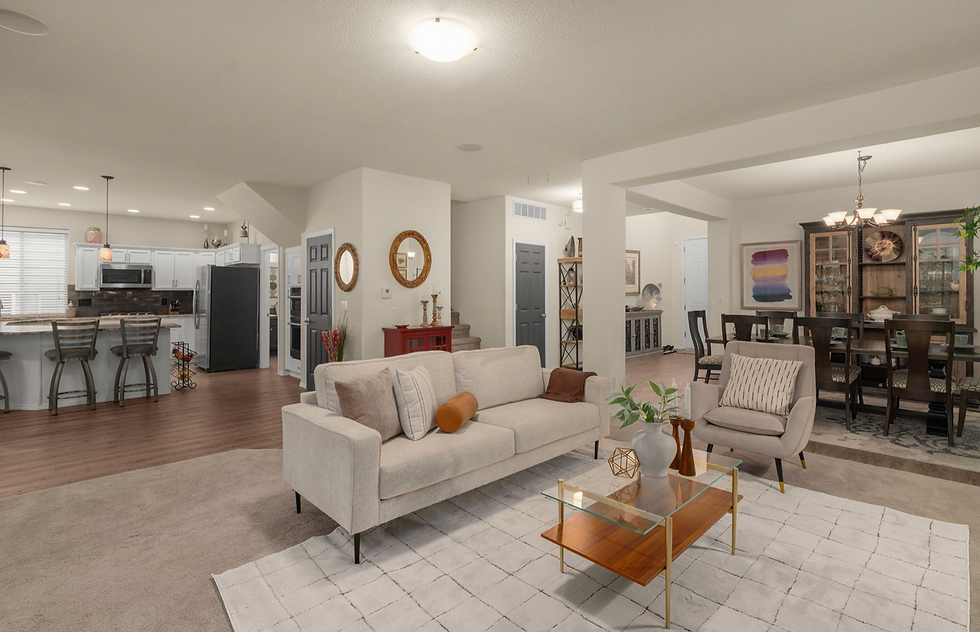
Inside, multiple living areas, flexible bedroom configurations, and an updated kitchen illustrate how residential design has evolved to accommodate changing lifestyles.
The exterior draws inspiration from an earlier period of American homebuilding, while the interior reflects the expectations of twenty first century suburban living.
What makes this transformation particularly interesting is the timeline.
The earlier home was built in the same year Tigard incorporated. Just over four decades later, the surrounding area was being transformed by another generation of residential development.
And the aerial photographs allow us to see that transformation for ourselves.
Whistlers Walk before and after development. Aerial photographs from 1996 and 2006 illustrate how Tigard's residential landscape changed in just ten years.
It's a small piece of Tigard's history, but one that reflects the much larger story of how the community grew and changed.
Homes change because the way we live changes.
And Tigard's neighborhoods provide a fascinating record of that evolution.
Preserving Tigard's Past
Despite its tremendous growth, Tigard has preserved several important connections to its beginnings.
The John Tigard House, built in 1880 for Wilson Tigard's son John, is one of the most notable. The home faced demolition in the late 1970s as commercial development expanded along Pacific Highway. Rather than allow an important piece of local history to disappear, preservation advocates organized an effort to save the structure. The Tigard Historical Association helped relocate and restore the home, which now serves as the John Tigard House Museum.

Historic Main Street provides another connection to the city's past.
The original railroad era commercial district has been the focus of revitalization efforts, including public gathering spaces and pedestrian improvements.
The Tigard Heritage Trail, developed along a former railroad spur, also tells the community's story through public art and interpretive displays.
These places offer reminders of the people and events that helped shape the city.
Tigard's History Is Written Into Its Homes
From the John Tigard House to historic Main Street and neighborhoods like Whistlers Walk, Tigard's history is written into its buildings.
Each generation has left something behind, from nineteenth century farmhouses to mid-century ranch homes and the Craftsman inspired neighborhoods of the early 2000s. The architecture has changed. The landscape has changed. And the community continues to evolve.
But the story remains much the same.
It's about people finding a place to call home.
And that's a story Tigard has been telling for generations.
Whether you're interested in Tigard's history, exploring its neighborhoods, or considering buying or selling a home in the area, I'd welcome the opportunity to help.
When it's time to make your next move, I'd love the opportunity to be your real estate broker.
Dean Carver | Real Estate Broker, Keller Williams Portland Premiere
602-391-9434 | dean@carverhometeam.com
Data Driven. Client Focused.


Comments